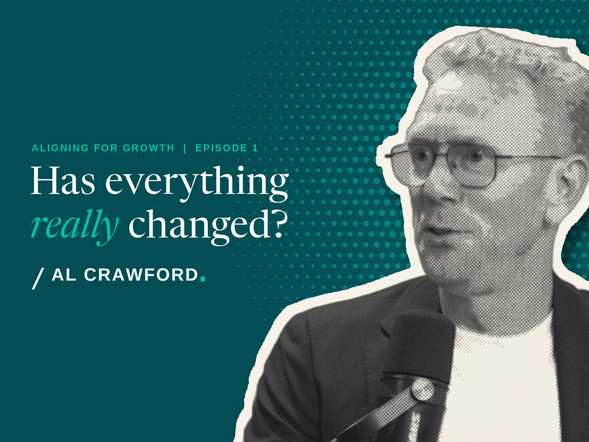
Aligning For Growth - Al Crawford
Andrew Wildblood sits down with Strategist and Advertising expert Al Crawford to discuss his perspective on aligning for growth.
Read moreInsight
Your health is a business risk, whether you treat it that way or not.
Andrew Wildblood, Co-Founder and Chief Executive Officer · 5 November 2026
2026 has tested me, mentally and physically, more than any year of my career.
It started normally enough. A two-week family break over Christmas and New Year, taking in the Ashes and England's poor showing. Then back to my role as chief commercial officer of a large transport and logistics company in the middle of a significant transformation.
January 21st looked like any other working day. I started at the gym with a CrossFit session and probably overdid it on the deadlifts. As I finished up, I noticed a strange headache and some mildly blurred vision.
Being the alpha male, I cracked on. I went to work and spent the next two hours presenting strategy work to our private equity owners.
By the end of it, my headache was worse and I felt sick. I apologised, excused myself and lay down. I couldn't contemplate driving. My EA suggested an ambulance, but I didn't want to make a scene, so I asked her to drive me to hospital instead.
I was misdiagnosed in emergency and sent home. Over the next 48 hours I deteriorated and developed serious stroke-like symptoms. At a second hospital I received exceptional care, and a diagnosis: a carotid artery dissection, affecting three nerves that controlled my speech, swallowing and tongue movement.
Recovery is more than physical
After 31 days in hospital and a high-risk operation, I went home still being fed through a tube and struggling to speak. It was confronting.
I asked what recovery would involve and got the list you'd expect. Medication, check-ups, more surgery, specialist care.
Then one doctor gave me the best advice I've had. She told me I was lucky to be alive, that I needed to take my time, allow three to six months, and make mental health support and a psychologist part of my recovery.
She'd clearly worked out my drive. Staff had already confiscated the gym equipment from my room, resistance bands included.
Her message stayed with me. Recovery was emotional as well as physical, and after a near-death experience I needed to work out what my new normal looked like.
I took that advice, and I'm making a brilliant recovery. The early weeks were about getting the feeding tube out, retraining my voice and getting moving again. A breath expert helped enormously. But the psychologist I've worked with has been remarkable, and probably the real game changer in how quickly I've improved.
Fit in body, not always in mind
Throughout my career I've been obsessed with fitness. It's what gave me the energy for the tough jobs, the hard transformations and the long stretches of intensity.
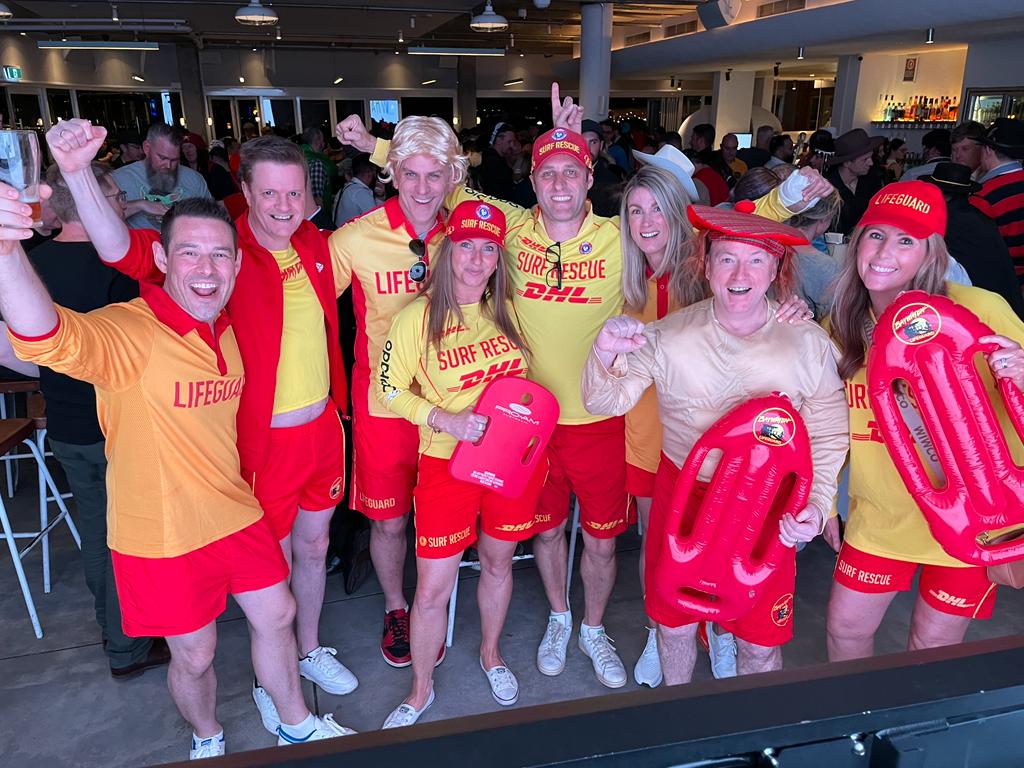
I brought that into how I led. At sales events I'd put on PT classes, yoga or a "seniors' walk" the morning after the big night, and I loved seeing people turn up on three hours' sleep!
It went beyond events, too. I sponsored health and wellbeing programs for my sales teams, because I wanted people thinking about their wellness holistically, not just hitting the gym. Sales is a demanding job, and I've always believed people perform at their best when they feel at their best.
What I've realised is that I wasn't nearly as disciplined about my own mental health. A few years ago my wife gave me a meditation course for my birthday. I've used it, but mostly in periods of high stress, and never consistently enough.
I championed wellbeing for my teams. I just didn't always practise it as well as I preached it.
The cost of going hard
Since getting home I've read a lot more on health and wellbeing, and spoken to plenty of executives and health professionals.
Burnout is increasingly common, especially among people my age. People in their 50s who have gone hard for 30 years and believed they were unstoppable. I was one of them.
The numbers are sobering. The World Health Organization and International Labour Organization estimate that working 55 hours or more a week carries a 35% higher risk of stroke than a 35 to 40 hour week. That one hit home.
And it isn't only the individual who pays. A study of nearly 13,000 Danish companies found that when a CEO spent five to seven days in hospital, company profitability fell by 7% that year. Our health is a business risk, whether we treat it that way or not.
The good news is that we have more information about our own bodies than ever. Apple Watch, Oura and plenty of others give us real-time data and trends on sleep, recovery and stress. The question is whether we pay attention to it, or crack on the way I did on January 21st.
The badge of honour that isn't
Too many of us have worn unused leave and long hours as a badge of honour. I certainly have.
But it isn't commitment. It's risk, both to us and to the businesses that rely on us.
And leaders set the culture. If we skip our leave, answer emails at midnight and boast about it, our teams will follow. If we take our recovery seriously, we give them permission to do the same.
Health is wealth
My situation isn't unique. But it has made me stop and think about what really matters.
Do we really want to die on the job, or run ourselves to the point of burnout? How do we make space for our health and wellbeing, so we have the balance and longevity to keep doing the work we love?
It means looking after all of it, body and mind, and checking in on each other, not just ourselves. As the saying goes, health is wealth.
Why we started Caidence
This experience also gave me something I hadn't had in 30 years: time to think about what I want to do with the next ten.
The answer was to take everything I've learned leading commercial teams and give it back to organisations. Helping leaders build growth that lasts, rather than growth that comes at the expense of their people, or themselves.
At Caidence, we look at the whole commercial engine. Strategy, structure, process and data, but also the people who run it and the pressure they're under. A sales team that's burnt out won't hit the number for long, no matter how good the plan is.
If you're a business or sales leader, start with yourself. Check your diary, your sleep and your leave balance. Then ask how your team is really going.
And if you're working out how to grow without running your business, or yourself, into the ground, we'd love to have a conversation.
Andrew Wildblood sits down with Strategist and Advertising expert Al Crawford to discuss his perspective on aligning for growth.
Read moreSales can be a hard task - asking more of your team without creating the right environment doesn't get the team behind you - recognition and fun must be part of your strategy!
Read moreThe real AI opportunity is not better tooling - it is building the commercial system strong enough for AI to amplify.
Read moreBook a discovery call and we'll walk you through our Revenue Engine Diagnostic™.